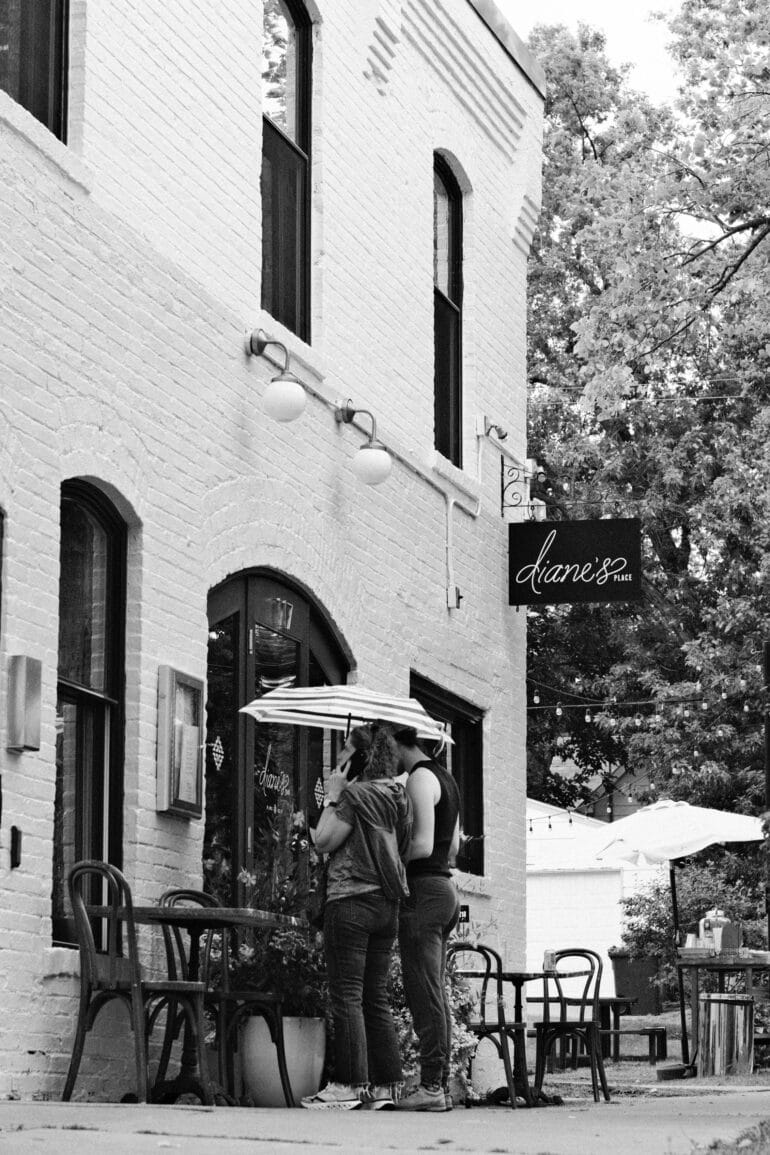

To walk into Diane’s Place on a Minneapolis morning is to feel an immediate sense of calm. The air, thick with the scent of butter browning and lemongrass blooming, wraps around you like the coziest of sweaters in the crisp, Minnesota weather. Natural light pours in from the arched windows, bathing the dining room in a serene glow. The space is unified by warm, blonde wood, which appears everywhere from the long, inviting bar to the sturdy tabletops and the beams overhead. The room is cozy, intimate, and alive with a gentle hum of conversation and the clink of forks on plates. Nestled in Northeast Minneapolis’s historic Food Building, a community hub for local artisans, it feels less like a formal restaurant and more like stepping into the city’s most welcoming kitchen.
It is this unassuming neighborhood gem that Food & Wine Magazine has just awarded their highest honor: 2025 Restaurant of the Year. The award celebrates not opulence or avant-garde cuisine, but something far more elusive: the profound feeling of being cared for. When chef-owner Diane Moua received the phone call with the news, her reaction was as genuine as the food she serves. “I was immediately thrilled and started crying,” she told the Star Tribune. “I’m so happy and excited”. The tears were not just for the award itself, but for the culmination of a journey that has been decades in the making—a journey to build a place that finally feels, in every sense of the word, like home.
For over twenty years, the Twin Cities knew Diane Moua as a pastry master who created magic in the kitchens of the region’s most revered fine-dining establishments. She was the Le Cordon Bleu-trained executive pastry chef at legendary restaurants like La Belle Vie and, later, for Gavin Kaysen’s celebrated Soigné Hospitality Group, overseeing the pastry programs at Spoon and Stable, Bellecour, and Demi. Her work earned her six James Beard Award semifinalist nominations and three finalist nods, two of them in the nationally recognized category of Outstanding Pastry Chef. She was, by every measure, at the pinnacle of her craft.
But when she wasn’t working, Moua retreated to what she calls her “happy place”: cooking the savory, soulful Hmong food of her upbringing. This was the food of her family, Hmong refugees who fled their home in Southeast Asia following the Vietnam War and settled in the Midwest under the Refugee Act of 1980.
The restaurant is a direct extension of Moua’s own home and heritage, a philosophy woven into its very fabric. It’s visible in the framed Hmong wedding skirt that hangs on the wall—a gift from her mother whose intricate embroidery tells a story of family and tradition. But this deep sense of care extends beyond the decor and into the restaurant’s operations. Moua intentionally delayed launching dinner service until she could do it without overwhelming and exhausting her team, a quiet testament to a healthier vision for the notoriously grueling hospitality industry. At Diane’s Place, warmth isn’t just an aesthetic; it’s a business model that treats staff like family and guests like old friends, all with the profound goal of making you feel completely, effortlessly at ease.
With Diane’s Place, the two parallel tracks of Moua’s culinary life—precise, European-inflected pastry and rustic, Hmong home cooking—have finally, beautifully, merged. The menu tells a story that flows from morning to night.
Brunch is a masterclass in nostalgic indulgence, where Moua’s pastry skills shine. The now-famous Thai Tea French Toast, made with thick-cut brioche and a luscious mascarpone whip, sits alongside savory-sweet creations like the flaky Spam and Nori Croissant. The pastry case itself is a treasure chest of rotating delights, from a tangy Green Scallion Danish to a decadent Everything Cream Cheese Brownie.
As evening falls, the menu transitions to heartier fare rooted in Hmong tradition. Here, you’ll find tender Sour Pork Short Ribs glazed in a tamarind caramel, a fragrant and complex duck stew, and a perfectly crispy whole-fried branzino served with herbs and lettuce for wrapping. It’s food that comforts and excites in equal measure, a perfect marriage of technical skill and soulful memory.
The decision by Food & Wine to name Diane’s Place its Restaurant of the Year is the culmination of a new paradigm in American dining, one that values personal narrative and genuine hospitality as much as technical prowess. In his statement, Food & Wine editor Hunter Lewis pinpointed the restaurant’s unique power: “Diane’s Place stood out for its exceptionally high level of service and hospitality, and for the way that Diane Moua and her team share Hmong foodways with their Minneapolis community through the menu and culture of the restaurant.” The magazine praised it as a place that “delivers the kind of hospitality that makes you feel like you’ve been invited into a friend’s home for a deeply personal and delicious meal.” The award, then, is for the entire ecosystem Moua has built—the food, the story, the culture of care, and the act of sharing it all with generosity and grace.
This monumental win is, however, just the latest in a string of accolades the restaurant has received since opening its doors in April 2024. It was named one of the New York Times’s 22 best bakeries in the U.S., earned a glowing two-star review from the same publication, and was selected as one of the Star Tribune’s Restaurants of the Year for 2024. Nationally, the award signifies a watershed moment, with Food & Wine celebrating how the restaurant “brings the comforting flavors of Hmong cuisine to the forefront of American palates”. It also solidifies the Twin Cities as a vital center of the American culinary conversation, a place where the most exciting restaurants are driven by deeply personal stories. Diane’s Place didn’t just win because its food is delicious; it won because it represents the very soul of modern American dining—a future that is more diverse, more personal, and more profoundly human.
In a cozy corner of Minneapolis, Diane Moua is not just serving some of the best food in the country; she is serving a vision of a better, kinder, and more delicious world.