
There is a version of this conversation that happens in nearly every brewery, and it goes something like this: the food is an afterthought. The menu exists because the city requires something to be on offer, or because someone in accounting determined that food orders extend dwell time, or because the taproom needed something to fill the space between the bar and the bathrooms. You’ve been there. You’ve ordered the pretzel with the bright-yellow cheese sauce that came out of a warmer and landed on the table with a dull, uninspired thud. You’ve had the flatbread. You have said, “it’s fine for a brewery,” and moved on. Rinse. Repeat.
That framing—for a brewery—is the thing we’re trying to explore, to interrogate, with this series. What does it actually mean when a brewery takes its kitchen seriously? What does that food look like, taste like, and cost? And does the kitchen at any of these places merit a conversation that doesn’t require the qualifier?
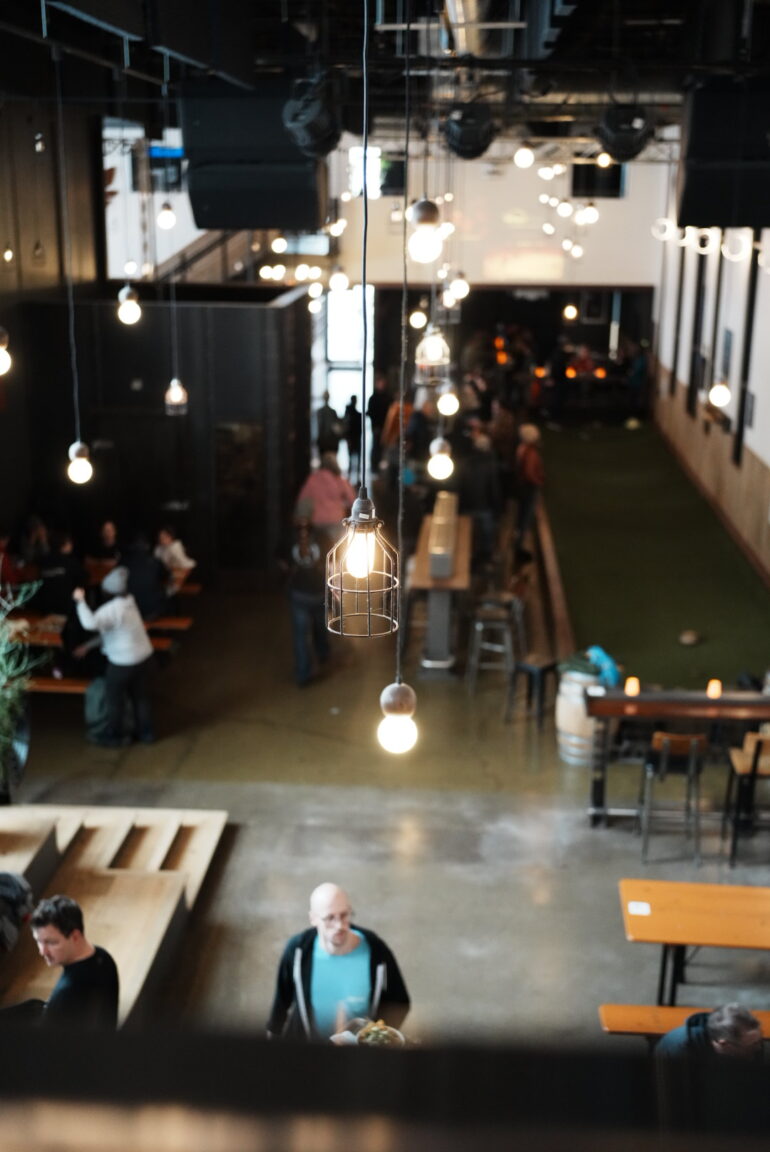
Pryes Brewing sits on the Mississippi River in northeast Minneapolis, in the kind of building that earns its own adjectives—the kind of space where the industrial bones have been left largely intact and the warm, dim lighting does the rest. The patio overlooks the water. Inside, it’s one of the better-lit breweries in the metro in the sense that it isn’t lit at all, or at least not harshly: everything comes through amber and low, more supper club than taproom. People come here for the river view in summer. They come for the space (and the outdoor saunas) in winter. The beer, to be direct about it, has historically been a secondary draw—functional, sometimes good, occasionally genuinely impressive, but not the reason you’re making the drive.
The food, though. That’s the thing worth talking about.
The Elote Fries: Larger Than Expected, Better Than They Need to Be
We started with the elote fries, which are waffle fries topped with charred corn, Tajín crema, cotija cheese, cilantro, and lime. The menu description is accurate. What the menu doesn’t tell you is that the portion arrives in something closer to a mixing bowl than a basket, and that the Tajín crema—the thing that ties the whole situation together—is genuinely good. Not good-for-a-bar-app good. Actually good.
Let’s get the honest part out of the way first: these are food service waffle fries. The kind that come frozen and get dropped in a fryer and have been doing so reliably for decades. There’s no attempt to make them anything other than that, and honestly, that’s not the insult it might sound like. These fries are cooked correctly, which turns out to matter enormously. The exterior has real crispness to it without crossing into the territory where you’re eating something that feels structural—no shards, no concrete toughness, no jaw work required. The inside is soft and yielding. They held together through the full bowl.
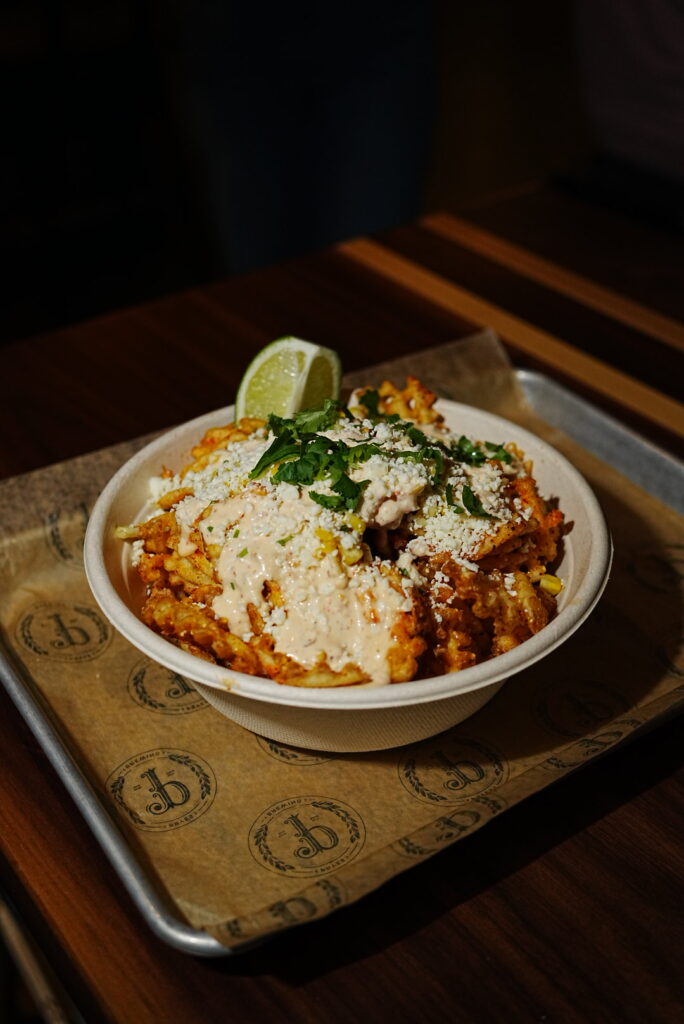
The problem with elote-style fry presentations, as with nachos, is that everything interesting happens on the surface. By the time you’re three-quarters through the bowl, you’re working through unflavored starch and wondering where the crema went. That’s true here. The salt levels were also inconsistent in a way that went beyond the expected variation: some bites were fine, a few were aggressively salty in a way that suggested the toppings hit unevenly. Add the lime, though, and something clicks. The citrus pops through the salt and the fat and the cotija funk in a way that makes the whole thing feel lighter and more considered than it did without it. Don’t skip the lime.
At $16 or $17 for a bowl of fries, this is a stretch. These are good, genuinely enjoyable, and we’d order them again without hesitation. But the price is asking for something the kitchen can’t quite deliver, which is the illusion of labor. It’s hard to sustain $17 when the guest can see exactly what they’re eating. A stronger case for the price would be more cheese throughout, maybe a side of queso for dipping, a little heat. A pickled jalapeño. Something that earned the number. At that point, the price feels warranted. A deal, even.
What it is, though, is exactly what a good brewery appetizer should be: something to eat while you’re deciding, something that’s a little different from the defaults, something you’ll want to finish.
The Fungi Pizza: This Is the One
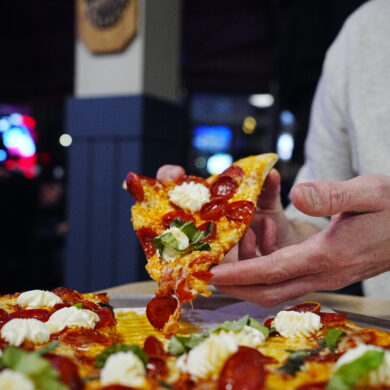
Pryes offers several pizzas, and we’ve worked through most of them across multiple visits. The Pikliz (the Haitian-inspired pepper slaw pizza) is a promising concept that hasn’t resolved itself yet; it wants to do something interesting and stops just short of getting there. The pepperoni and burrata is solid, comfortable pizza, though the burrata reads less as burrata and more as fresh mozzarella torn and distributed before going into a hot oven, which means the whole point of burrata (the cool, creamy center, the textural contrast) doesn’t survive the bake. That’s a labeling issue as much as a kitchen issue. The pizza itself is good.
The fungi pizza is the reason to come back.
Mushroom cream sauce, mozzarella, cremini mushrooms, buttons, oyster mushrooms, roasted garlic, finished with parmesan, parsley, and crispy onions. It arrived at the table smelling earthy and deep and savory, that particular richness that comes when mushrooms have been given enough heat and time to concentrate into something almost meaty. The parsley oil came through on the nose separately from the mushrooms, a bright herby note running underneath the umami. Before taking a bite, we spent a moment just acknowledging the smell.
The fungi pizza is the reason to come back.
The crust is worth understanding on its own terms. It’s thin, with a light cornmeal dusting on the underside that gives it a subtle grit and a slightly nutty character. Not dry, not brittle. It bends without breaking and snaps cleanly at the fold. It’s the kind of crust that makes the pizza feel assembled rather than just constructed: something that holds the thing together because it was built to.


The mushrooms themselves had a roasted character: not sautéed soft, but with the edges of something that had seen real heat, the kind of texture that pulls back slightly when you bite it. Umami stacked on umami, no single note dominating. Rich, but not in the way that makes you regret the second slice. Not heavy. One of us described it as tasting like fall and winter, and that’s the most accurate thing said all night: it’s a pizza for the cold months, for the kind of hunger that a salad doesn’t address.
The crispy onions look exactly like French’s fried onions, the kind in the green can that you scatter over a green bean casserole at Thanksgiving. They probably are. They have no particular flavor of their own beyond fried. And they work anyway, adding a faint salty crunch that plays off the creaminess of the sauce and the earthiness of the mushrooms in a way that justifies their presence even if it doesn’t justify making them in-house.
It tastes like fall and winter.
Small adjustments would make it better. The herbaceousness was inconsistent: some bites had it, some didn’t, and a handful of fresh herbs scattered over the top after the bake (arugula, chives, fresh thyme, take your pick) would bring the whole thing into focus. More salt. Something acidic, too. Pickled shallots or a few drops of something bright, just to cut through the richness and give it a place to land. These are tweaks, not repairs. The pizza is good now. These changes would make it exceptional.
For the record: Surly’s pizza reputation has been durable in this city for years. This mushroom pizza goes toe to toe with anything we’ve had there, and it comes out lighter on the other side. That’s a real thing worth knowing.
The Fritters: Don’t Judge Them by How They Look
The zucchini fritters arrived fast. Too fast. They hit the table maybe thirty seconds after ordering, which is the kind of speed that tells a story you’d rather not be told. They also looked, from across the table, like something that had experienced a sustained period of high heat. Dark. Dense. Plated alongside two ramekins: one green goddess, one warm marinara.
We were prepared to be disappointed.
The fritters are made with feta, zucchini, mint, parsley, and lemon. They don’t taste like any of those things individually, which sounds like a critique and isn’t quite. The mint disappears into the heat; the delicate aromatic oils don’t survive frying. But the lemon comes through in the back as a quiet brightness, and the feta lends a subtle salty funk that keeps the whole thing from landing flat. What you end up with is something dense and warm and mildly spiced, cumin-adjacent, a warming note that sits in the back of the throat for a moment after you swallow.
The texture is the thing. Not light, not airy, not what “fritter” typically suggests. More like a hush puppy that skipped the lightness. Or a meatball that decided not to be meat. Dense in a way that satisfies rather than exhausts. Moist enough that you never feel like you’re working through something dry. The part that had looked alarming didn’t taste burnt. That was the surprise.

They weren’t hot. They were warm, which tracks with the speed at which they arrived. You’re probably eating something that rested in a window for a few minutes before landing at your table. That’s a kitchen pacing issue, and it’s worth knowing about. But it didn’t ruin the fritters. It made you wish they’d been timed better, which is a different kind of disappointment.
The green goddess is the right call here: cool, herby, with a delicate cucumber flavor running underneath everything, it plays off the warmth and density of the fritter in a way the tomato sauce simply doesn’t. The marinara is warm, which is rarer than it should be, and it’s not bad, but the green goddess wins. A small note on the plating: if the kitchen ever wanted to make this dish look like it costs what it costs, serving the fritters directly on a pool of the green goddess rather than alongside it would do most of the work. Add a dusting of grated parmesan or some small crumbles of feta and a few fresh herbs and the dish is on another level entirely. That’s a two-second change and a completely different presentation.
Get these. Go in expecting something different from what the name suggests, and you’ll come out having eaten one of the better appetizers available at any brewery kitchen in the metro.
One more appetizer worth naming: the garlic cheese bread has been on the menu since the kitchen opened, and for good reason. It’s the kind of thing that gets ordered out of habit on the first visit and then on purpose for every visit after that. Warm, rich, straightforward, exactly what you want in your hands while the pizza is still in the oven. It has become, in the best sense, a menu staple.
We do miss the fried raviolis, for the record. They were on the menu for a while and then weren’t, which is a loss, not because fried ravioli is a particularly novel concept (it’s become something of a cliché across bar menus generally, and fairly so), but because Pryes did them well and that matters. If there’s a campaign to bring them back, consider this a vote.
The Space, The Beer, The Honest Accounting
There are things about Pryes that exist alongside the food and deserve some acknowledgment.
There is no bar seating at Pryes, which is worth knowing before you go and worth mourning a little once you’re there. A place this good-looking, with that river visible through the glass garage door, deserves a proper perch. You order at the bar and find a table, which works fine on quieter evenings and creates a different energy on busy ones.
On busy days, the bar can move with a certain efficiency that doesn’t always leave room for much else. The bartenders are friendly, genuinely so, but customer service isn’t quite the star of the show. On more than one visit, the interaction felt less like hospitality and more like throughput: get the order, move the line, next. Understandable given how slammed this place gets on a Saturday. Not exactly what you’d hope for at a destination worth driving to. The kitchen staff and food runners, by contrast, were warm and attentive every time. Whatever is happening at the pass is working. The front-of-bar experience has a bit more ground to cover.
Whatever is happening at the pass is working.
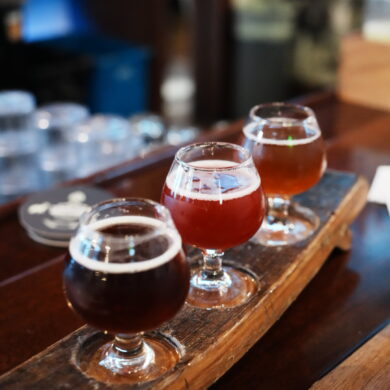
The beer has improved. We’ve been here enough times to have an opinion on the arc of it, and the current pours are better than they’ve ever been: less of that faint artificial chemical flavor, less sweetness that used to lurk in the hazies, more actual flavor resolving in the finish. It still may not be the reason you’re making the trip, and it still may not be what you’re telling people about on the way home every time, but it is getting much closer.
What you’re telling them about is the patio. If you haven’t sat outside at Pryes in the evening with the river below you and a light running through the gaps between the downtown skyscrapers, you’ve missed the best version of this place. The interior runs a close second: warm light, close tables, the kind of dim that makes everything feel slightly more considered. It’s genuinely one of the more pleasant brewery interiors in Minneapolis, in a city that defaults to bright industrial as a design language and calls it done.
But this series isn’t about ambiance. It’s about whether the kitchen earns a conversation that doesn’t require the qualifier.
At Pryes, it does.
The Verdict
Go. For the mushroom pizza, specifically, and then stay for whatever else sounds good.
The fungi pizza is the best thing on the menu and one of the better pizzas we’ve had at any brewery kitchen in the Twin Cities. Full stop, no qualifier needed. The fritters will surprise you if you let them. The elote fries are better than the price suggests they should be and worse than the price suggests they should be, which is a strange thing to say and also exactly right. The pepperoni pizza is dependable, well-made, and mislabeled at the burrata end of things.
Pryes’s food is under-celebrated in a way that is probably tied to the fact that the beer and the view have always been the conversation. The kitchen deserves its own one.
What to order: The garlic cheese bread is a reliable opener while you wait. Follow it with the zucchini fritters and the elote fries; share both. The fungi pizza is non-negotiable. Add the pepperoni if your table has the appetite for a second pie. Get the lime on the fries. Get them while they’re warm.


Pryes Brewing Company | 1401 West River Rd N, Minneapolis, MN 55411 | pryesbrewing.com | Hours vary by season; check the website before you go.
This review is part of our ongoing series covering Twin Cities breweries with full in-house kitchens. We paid for our food and drinks. No comps, no advance notice.